Tag: interest rates
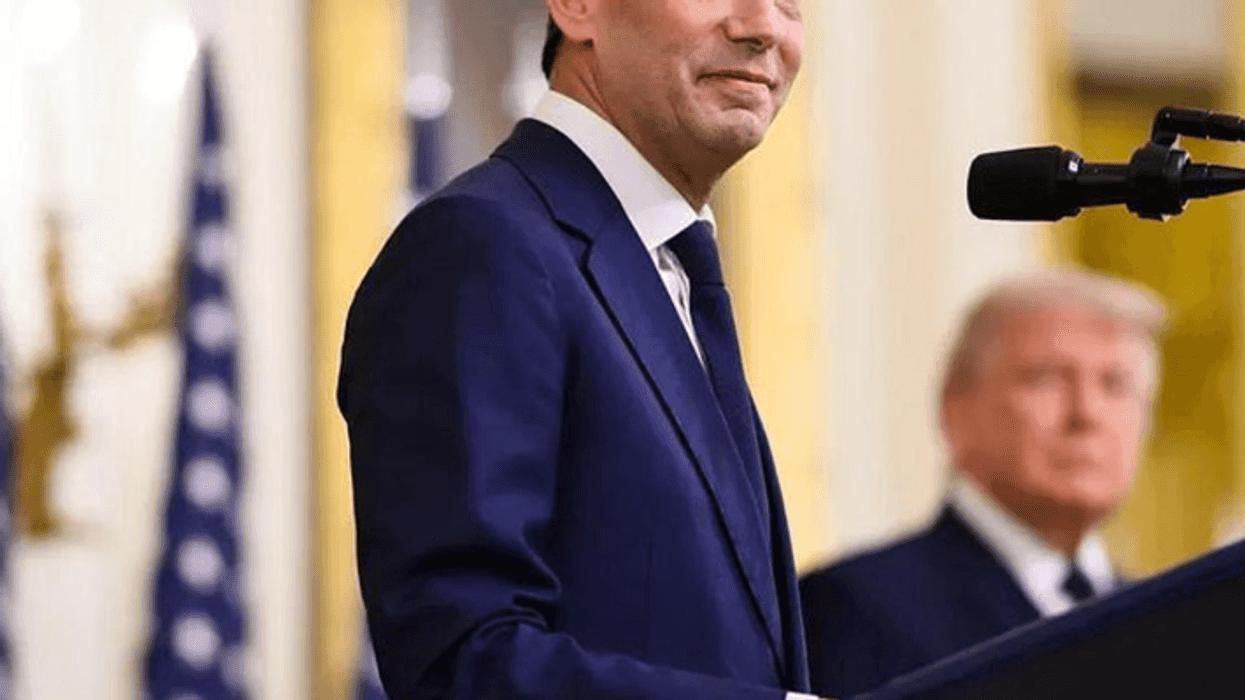
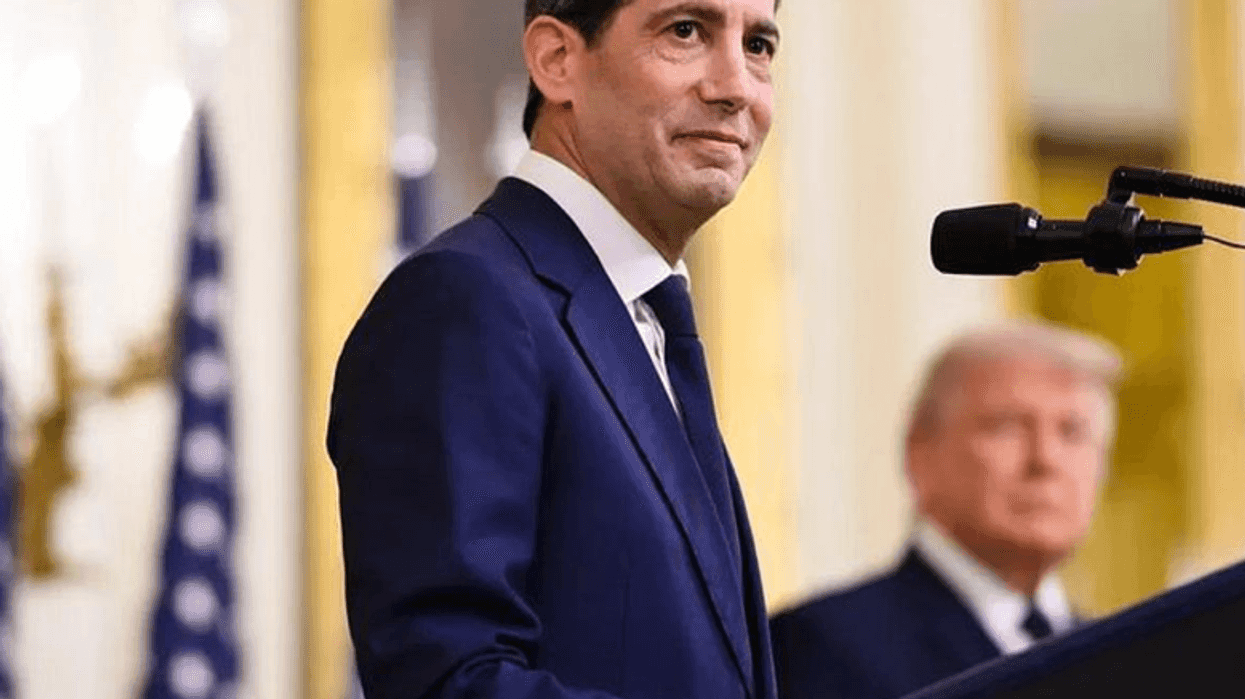
Warsh and Trump

Despite Troubling Signs, Warsh's Smooth Fed Debut Stays Course On Rates

I found the new Fed chair’s debut to be fascinating, comforting, and worrisome. Which is in itself interesting because Chair Kevin “Taskforce” Warsh (“Task” for short) talked a lot but said very little of note. Here are my takeaways.

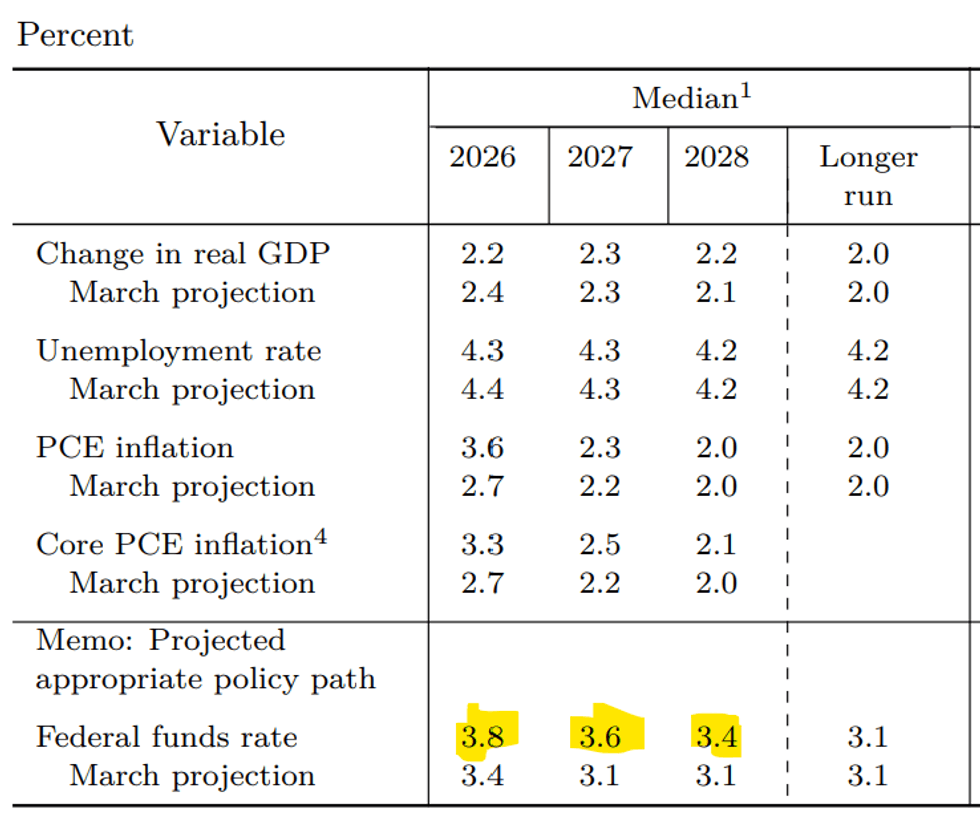
What did the committee do? Not only did they hold rates steady, as expected, but there was a more hawkish tilt to their expectations re future rates. Compared to their last meeting, the committee expects the interest rate they control to be higher both this year and next.

This change can be seen in the “dot plot” wherein the 19 committee members anonymously say where they think rates will need to go. Except there were only 18 dots for ‘26 and ‘27 and 17 for ‘28. Chair Warsh told us he’d abstained and someone else apparently joined him for ‘28.

I’ll have more to say about his abstention in a moment, but this hawkish tilt takes me to my next point.

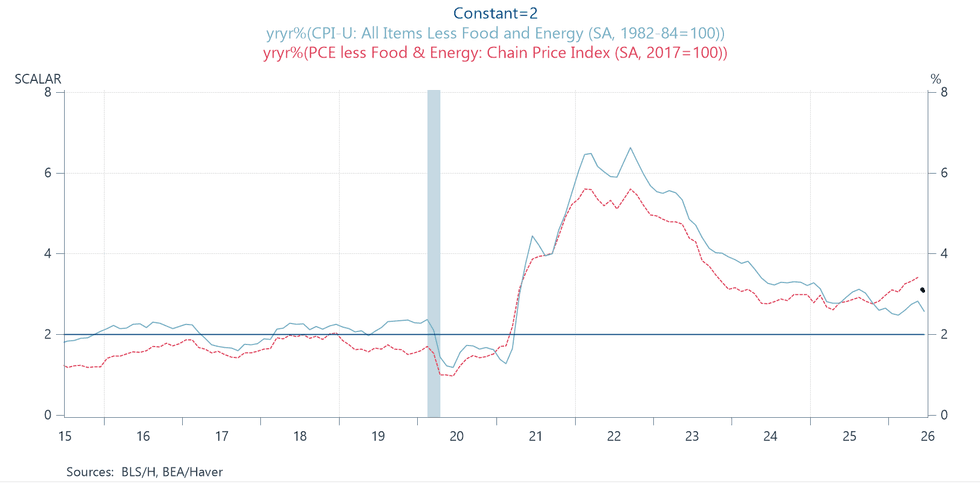
I said “worrisome” above. Why? The theme of the statement, the dots, and Warsh’s presser were all, quite reasonably in my view (this was part of the comforting part), about how the economy and labor market are doing pretty well, but inflation remains high and sticky. Even with Trump looking over his shoulder, Warsh would have been hard pressed to oppose the committee’s neutral/tightening bias. That’s just where the inflation data are right now.

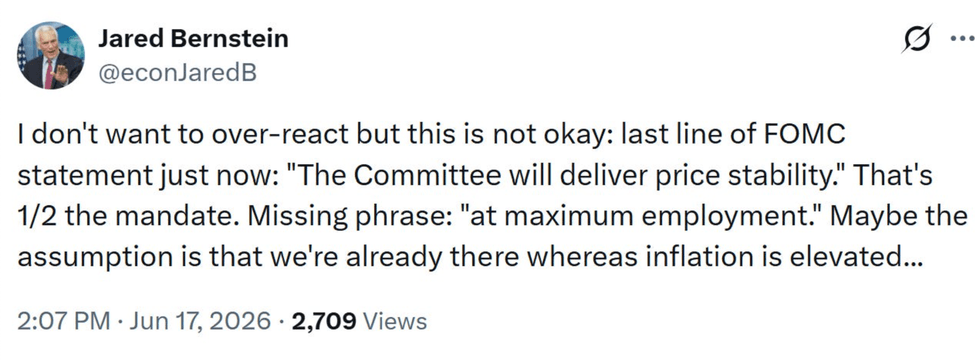
But “Task” isn’t new to this neighborhood, and I’ve long argued he just played a dove to get the job. That’s why I was struck—and maybe kinda over-reacted—to the FOMC statement a few minutes after its release:

The rest says: “...so no need to got there. But knowing Warsh's proclivities in this regard, I don't like it.”

Here’s why we should be nervous that Warsh will consistently down-weight the full-employment side of the mandate relative to the price-stability side:

—He’s long been a hard-money guy who worries more about inflation eroding asset values than unemployment eroding bargaining power and paychecks.

—He barely referenced the employment side of the mandate in his confirmation hearing.

—He hired Paul Winfree to be a temporary adviser as he settles into the new gig. This is the guy who wrote the (generally bonkers) Fed chapter in Project 2025, which calls for getting rid of the full employment part of the mandate.

Like I said, this concern isn’t new, and I tend to overreact when I think someone is threatening full employment conditions—a personality flaw for which I emphatically do not apologize. But this potential bias bears close watching.

What else did I find comforting? That would be the fact that Warsh didn’t come out swinging, going off on his colleagues for their tightening bias, signaling Trump, as Stephen Miran did, that he would push for cuts, regardless of the data. He praised his FOMC colleagues and the staff, and was generally highly diplomatic.

Now, if readers who know my proclivities conclude that my comfort should be Trump’s discomfort, I agree. This was a hawkish meeting, more so than expected, and Warsh went along with it. If Powell did that, Trump’s thumbs would have been spewing fire on social media, but he held his fire yesterday.

I took this as a win for Fed independence, but it’s way too soon to conclude that we’re safe in that regard. Still, you know my mantra: A bad day for Trump is a good day for America.

Anything else from the debut? Yeah, a few things.

—I’ve argued in recent posts that I take Warsh’s point how an excess of Fed communication isn’t helpful and can be harmful, leading markets and Fed watchers to overreact to stray voltage. But after yesterday, I’m worried he will push that too far, providing too little information in ways that could lead to unnecessary volatility and the return of the Fed-guessing-game that “forward guidance” was designed to end.

The statement was too bare bones, I thought, and Warsh wouldn’t answer any questions about where he thought things were headed, providing us no information on his “reaction function,” meaning how he and FOMC are processing the data with regard to rate movements. Whenever he was asked a question about this, he told us that he’d be setting up a taskforce to look into that. It became a comic tag line.

I doubt I was the only one who missed Powell’s plain speaking, his earnest efforts to clearly explain how he and his colleagues were thinking about things. In a word, Warsh was really quite opaque, and if that continues, it will generate problems born of insufficient communication.

—I’ve been to this taskforce rodeo many times, and have even led one or two. The majority of taskforces do little; they’re set up to give the appearance of doing something about a problem for which you don’t have a tractable solution. Some, however, yield important, actionable results. My prior in this case is that most of the many taskforces that Task announced yesterday won’t change much, with the exception of the communications/forward-guidance one.

That’s enough for now, and we’ll have ample time to scrutinize the new chair. I’m glad he didn’t come out swinging and I appreciate the seriousness about getting inflation back to target, especially with Trump lurking in the background. But I’ve got serious concerns that warrant close watching.

Jared Bernstein is a former chair of the White House Council of Economic Advisers under President Joe Biden. He is a senior fellow at the Council on Budget and Policy Priorities. Please subscribe to his Substack, from which this is reprinted with permission.

Will Bond Market Yields Force Trump To End His Blundering Iran War?

Will Bond Market Yields Force Trump To End His Blundering Iran War?

I’ll be very brief, both because we have very incomplete info on this and because I don’t like to veer too far from my political-economy lane. But one theme of this Substack is to track a point I made at its inception: incompetent leadership has stark consequences.

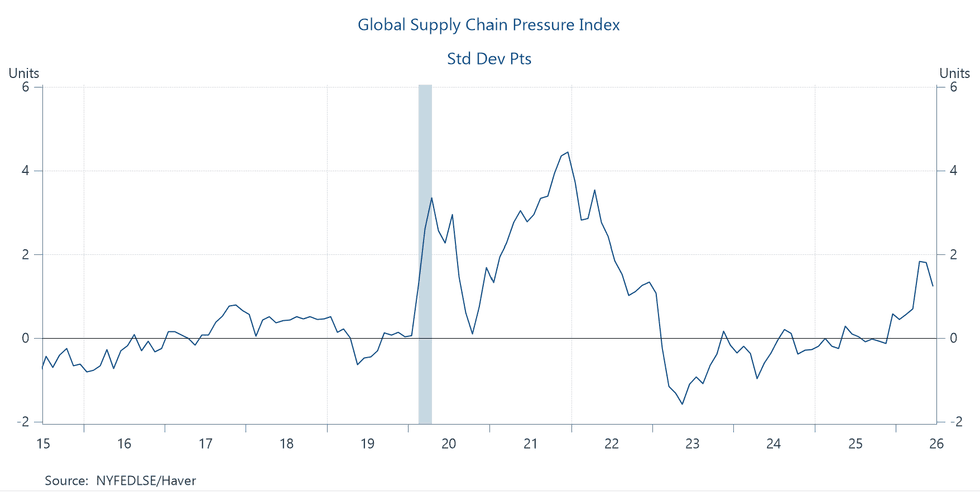
If what we’re hearing about the negotiations to end the war is correct, then everyone from policymakers to pundits to voters—especially voters—must ask the questions “What was that for? What did thousands of people die for? Why did the global economy have to undergo a massive disruption, elevating prices and interest rates? Why did the US have to further lower its international stature by not only getting dragged into this war, but by not winning it in any recognizable way?”

The answer cannot be regime change or, at least based on what we know, any thwarting of Iran’s nuclear aspirations. From the New York Times on Sunday:

Publicly, both the American and Iranian officials emphasized the concessions they hoped to secure. Mr. Trump said the deal would reopen the Strait of Hormuz, a vital waterway for oil and gas supplies, which Iran has effectively blockaded during the conflict, spurring a surge in global energy prices.
The Iranian officials said the deal Tehran had agreed to would reopen the Strait of Hormuz without any tolls; lift the U.S. naval blockade on Iran; stop the fighting on all fronts, including between Israel and Hezbollah, the Iran-backed armed group, in Lebanon; and release $25 billion in Iranian assets frozen overseas.

Also, this: “The future of Iran’s nuclear program, part of Mr. Trump’s case for launching the war, was unclear.” Summarizing conflicting reports, it appears that they’re going to table the issue for 60-90 days.

If this information is correct, then one narrow point that’s interesting to me is an answer to “why now?” might very well be the bond market. Back in April of last year, when bond yields spiked in response to Trump’s “Liberation Day” tariffs, he quickly backed off. I suspect the recent spike in bond yields is in the mix here as well.

But the real developing story here is that we may be looking at a deal that basically trades reopening the Strait—returning it to pre-war conditions—for economic sanctions relief and the end of our naval blockade.

If that’s even roughly correct, then this whole debacle must not be allowed to fade into the rearview mirror. It must be held up as the deeply costly blunder that it was, one whose accountability extends well past Trump, on to his Congressional enablers.

Stay tuned for further analysis. I’ll also be watching out for evidence of insider trading, which seems to accompany such developments these days. The depth of the incompetence is only matched by the depth of the corruption.

Jared Bernstein is a former chair of the White House Council of Economic Advisers under President Joe Biden. He is a senior fellow at the Council on Budget and Policy Priorities. Please consider subscribing to his Substack, from which this is reprinted with permission.
Fun Times Ahead! What Kevin Warsh Can Expect At His First Fed Meeting

Fun Times Ahead! What Kevin Warsh Can Expect At His First Fed Meeting

Newly appointed Federal Reserve chair Kevin Warsh will lead his first Fed meeting in less than a month. Ordinarily, I would feel sorry for a person in his situation. But since the guy is a rich, power-hungry jerk, I am looking forward to some great entertainment.

To set the table here, in his vast ignorance, Donald Trump has decided that interest rates should be much lower than they are now. He has muttered something along the lines of the Fed having a 1.0 percent interest rate instead of the current 3.5 percent rate.

Trump repeatedly threatened the outgoing Fed chair, Jerome Powell, who he had initially appointed. Trump started with insults on his Truth Social platform, moved on to threats of firing, and then told his Justice Department to cook up a criminal investigation.

While they at least temporarily suspended any prosecution, to get the votes needed in the Senate for Warsh, Trump has explicitly left the option on the table. And Acting Attorney General Todd Blanche has made it clear that he will indict people for getting Trump angry. Powell may still end up facing criminal charges for not going along with Trump’s demands to lower rates.

Trump also has said that he expects Warsh to lower rates or he wouldn’t have appointed him. For this reason, we might expect that Warsh will be looking to lower rates next month.

The problem for Warsh is that he can’t lower rates by himself. He would have to convince a majority of the 12-person Federal Open Market Committee (FOMC) to go along with lower rates. He is not likely to get much help here.

At the last meeting, there was only one person arguing for lower rates, Stephan Miran, another Trump appointee. Warsh replaced Miran in his seat on the FOMC when he became Fed chair. This means that Warsh will step into the meeting with 11 other FOMC members who wanted to keep rates unchanged at the last meeting. Several of them actually leaned toward raising rates.

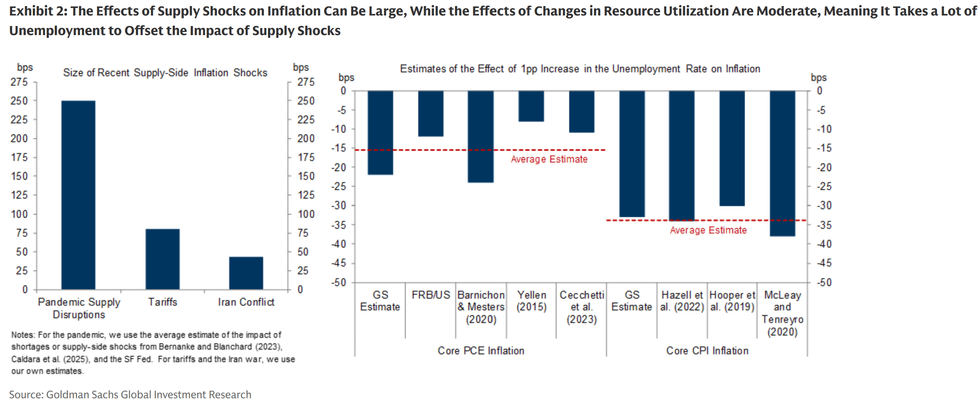
The new data since that meeting all point to higher inflation and also a somewhat improved labor market. That is not a mix that makes a good case for lowering interest rates.

The overall Consumer Price Index increased 0.6 percent in April, after rising 0.9 percent in March. This brought the year-over-year rate to 3.8 percent, the highest since early 2023. The core wasn’t too much better, rising 0.4 percent in April, bringing the year-over-year rate to 2.7 percent.

The Producer Price Indexes (PPI) and the Import Price Indexes were arguably even worse. The final demand index in the PPI rose 1.4 percent in April, bringing the year-over-year increase to 6.0 percent. The core index rose 0.6 percent, bringing its year-over-year increase to 4.4 percent..

The non-fuel import price index rose 0.8 percent in April, bringing the increase over the last year to 2.9 percent. These prices, on items like imported clothes and cars, had been falling in 2024. (The import price index does not include tariffs.)

These data all indicate a rate of inflation that is well above the Fed’s 2.0 percent target, and considerable pressure from input prices pushing inflation still higher in the future. It is hard to see how Warsh would be able to convince the other 11 FOMC members that the new data since the last meeting justify a rate cut.

This puts Warsh in the interesting spot where he either votes to keep rates constant (there will likely be members pushing for a rate hike) and incurs Trump’s wrath, or he casts a pointless vote for a cut. If Warsh does the latter, it will be the first time ever that a Fed chair has been in the minority on a vote on monetary policy.

If Warsh ends up being the only vote for a cut, like his predecessor, Stephan Miran, it would be truly unprecedented for a Fed chair to be completely out of line with the rest of the FOMC. Most often, the FOMC has no dissents, as the committee works to reach a consensus. The Fed chair being the lone dissenter would be extraordinary.

This dissent may make Trump happy, but it likely takes Warsh further from the goal of lower rates. Unless Trump tries to jail the rest of the FOMC, it will be necessary to convince the other members that there is a good argument for lower rates. A vote for a cut with the data we have recently seen does not look serious. It is not going to carry weight with the people Warsh needs to convince.

As I said, if he weren’t a pathetic, power-hungry jerk, I would feel sorry for him. However, given the situation, I look forward to the entertainment.

Dean Baker is a senior economist at the Center for Economic and Policy Research and the author of the 2016 book Rigged: How Globalization and the Rules of the Modern Economy Were Structured to Make the Rich Richer. Please consider subscribing to his Substack.


Now It's The Fed Chair's Choice: Should He Stay Or Should He Go?

Now It's The Fed Chair's Choice: Should He Stay Or Should He Go?

Just to be clear, I’m not saying that the Clash had those numbers right re the trouble ratio if he stays or if he goes. But it did seem to be the relevant hook.

Now that the pathway for replacing Federal Reserve Chair Jerome Powell with Trump’s nominee, Kevin Warsh, was cleared yesterday, I expect Warsh’s nomination to quickly get out of committee and over to the Senate floor, where he should have no problem getting a majority (he may not get any D votes, but he doesn’t need them). He could then take over the chair in mid-May, when Powell’s term as chair ends.

Why the bold above? Because even though Powell’s term as chair ends, his term on the Fed board doesn’t end until January ‘28. The norm, however, is for Chairs to leave the building once their Chair term ends, with, as far as I can tell, one exception: when Marriner Eccles stepped down from the Chair in 1948, he rolled over to the Fed board for another few years.

In this case, if Powell stayed on, Miran would have to resign to make room for the newly minted Chair Warsh to take over.

A number of folks, including commenters here, have argued to me that, in the interest of protecting this critically important institution and the economy itself from Trump’s destructive influence, Powell should emulate Eccles. I certainly understand their argument, but I’m not wholly there. I’ll explain my thinking, but only briefly, because this is Powell’s call and there’s nothing anyone can tell him about this that he doesn’t know. (Read Nick Timiraos in the Wall Street Journal this morning for a comprehensive treatment of the stay/go question, with strong stay-vibes from former Fed economist David Wilcox, who knows more about the inner workings and history of the institution than most).

The motivation for stay, Jay, stay! is understandable nervousness about Warsh’s independence from Trump, a concern I share and have written about in recent days. Powell has been a fierce defender of such independence and thus his presence, especially absent Miran, who has consistently voted, often alone, for the rate cuts Trump wants, would be reassuring in that regard.

There’s no doubt in my mind that Powell’s staying on the board would yield better, more balanced, and more independent-from-Trump monetary policy, which would in turn be better for the U.S. and even the global economy. But there are two countervailing factors.

First, Powell has earned the right to do whatever he sees fit. He’s delivered consistently thoughtful, carefully explained, effective monetary policy in 14 years of service, eight of which he was chair. And many of those years were under Trump (who, for the record, reappointed him), wherein he got more presidential harassment than any Fed chair in history, from daily badgering and name-calling, to a phony criminal inquiry.

To be clear, our hearts should not over-bleed for him. He also had one of the coolest jobs in the world, backed by a deeply talented staff and some very smart colleagues on the board. You take the bad with the good. But the point is he served admirably, and has not only pulled rabbits out of monetary-policy hats—the post-pandemic soft landing, which many tony economists said couldn’t happen—but stood up to Trump and preserved the Fed’s independence. He’s earned the right to make whatever next move he desires.

But second, and I know not everyone will share this take, Warsh deserves the chance to establish himself as the new chair without the old chair hanging around. Readers know that I fear where he’s going with his new gig, but under the assumption that he’s legitimately confirmed in coming days, he has the right to takeover and begin to put his imprimatur on the joint.

If Powell should decide otherwise, i.e., that, as Wilcox argued in the Timiraos Wall Street Journal piece, the institution should at least initially be protected from Warsh’s unencumbered leadership, or, for that matter, that he (Powell) is still at risk of prosecution from the bullshit inquiry that Trump cooked up, I’ll of course support his decision.

But the norm of the Chair stepping down is a norm for a good reason: clearing the path for the new Chair is good for the institution. Of course, independent monetary policy is also very good for the institution, so there are good arguments on both sides.

Luckily, there’s only one person who has to make that call. And his call will be the right one.

Jared Bernstein is a former chair of the White House Council of Economic Advisers under President Joe Biden. He is a senior fellow at the Council on Budget and Policy Priorities. Please consider subscribing to his Substack.


Shop our Store

Headlines

Editor's Blog

Corona Virus

Trending

World